

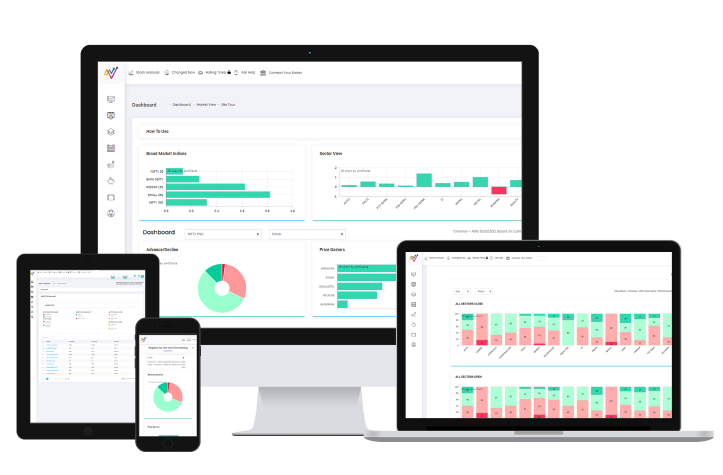








Stop Following Random Stock Tips: Use NeoTrader and Confirmation Process Instead
“Which Stock Should I Trade Today?”
For many people in the stock market, this becomes a daily question.
• WhatsApp groups
• Telegram channels
• Television
• Friends
• Social media
Someone is always suggesting a stock.
The problem begins when you receive the stock name but not the process behind it.
• Why this stock?
• Why now?
• Is the setup bullish or bearish?
• Where is the invalidation level?
• Is the broader market supporting the trade?
• If the signal came one hour ago, is it still worth entering?
This is why moving from stock tips to stock screening is such an important step towards becoming a more independent trader.
Step 1: Don’t Search the Entire Share Market
The first problem is scale.
You cannot practically monitor hundreds of stocks manually every few minutes.
NeoTrader uses screens, filters and strategy pages to reduce a large universe into smaller groups of stocks that meet defined technical conditions.
For example, Expert Alerts can identify stocks appearing across different technical studies. Instead of reacting to every alert, users can focus on stocks qualifying across multiple modules.
That immediately changes your question from:
“Give me a stock.”
To:
“Which stocks currently meet my trading conditions?”
Step 2: Build a Focused Watch list
A practical screening process can involve:
• Filtering a group of stocks
• Adding shortlisted stocks to a watchlist
• Opening the watchlist inside Rolling Ticker
• Waiting for additional confirmation
This is fundamentally different from continuously searching the entire market.
Your initial universe might contain hundreds of stocks.
A stock screener may reduce that number to 30.
Technical context may reduce it further.
Confirmation might leave you with only a handful of stocks worth watching.
NeoTrader’s Dynamic Watchlist and Rolling Ticker are designed to support this type of focused process.
Large Stock Universe → Screened Stocks → Technical Shortlist → Confirmed Opportunities
Step 3: A Signal Is Not Automatically an Entry
This is where many tip-dependent traders get trapped.
A stock alert appears.
They immediately enter the trade.
But several questions still need to be answered:
• When did the signal appear?
• At what price was it generated?
• Where is the stock trading now?
• Does the original risk-reward structure still exist?
A trade should not be entered blindly long after the original alert because the price may have moved enough to change the original setup.
Fresh Signal ≠ Permanent Invitation to Enter
Before taking the trade, check whether the setup still exists.
Step 4: Check the Direction Before the Entry
Suppose your NeoTrader intraday dashboard identifies a bearish candidate.
Now check the larger chart.
Is the stock already structurally weak?
Or has it simply produced one small bearish candle within a strong uptrend?
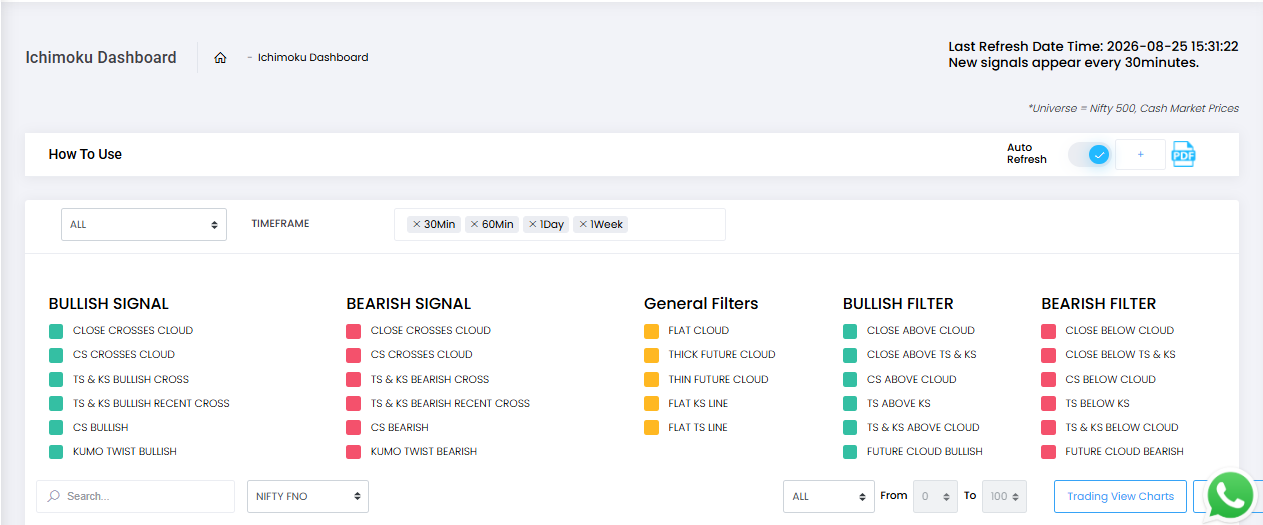
A stronger review can combine:
• Daily charts
• 30-minute charts
• RSI
• Ichimoku
• Fibonacci levels
• Support and resistance
The objective is not to over-complicate the process.
The objective is to avoid blindly trading the first signal.
Step 5: Know Where Your Trade Is Wrong
Stop-loss placement is another area where structure matters.
The stop-loss should not be a random number chosen because:
“₹500 loss is enough.”
Or:
“I will give it 2%.”
A more structured way to think about it is:
“At what level is my original analysis no longer valid?”
That is your technical invalidation point.
NeoTrader provides target and stop-loss information across several trade sections, but execution and trade management remain the user’s responsibility.
Broker integration can execute the initial order, while stop-losses and targets require active management through the broker terminal.
That distinction is extremely important for someone moving away from dependence on stock tips.
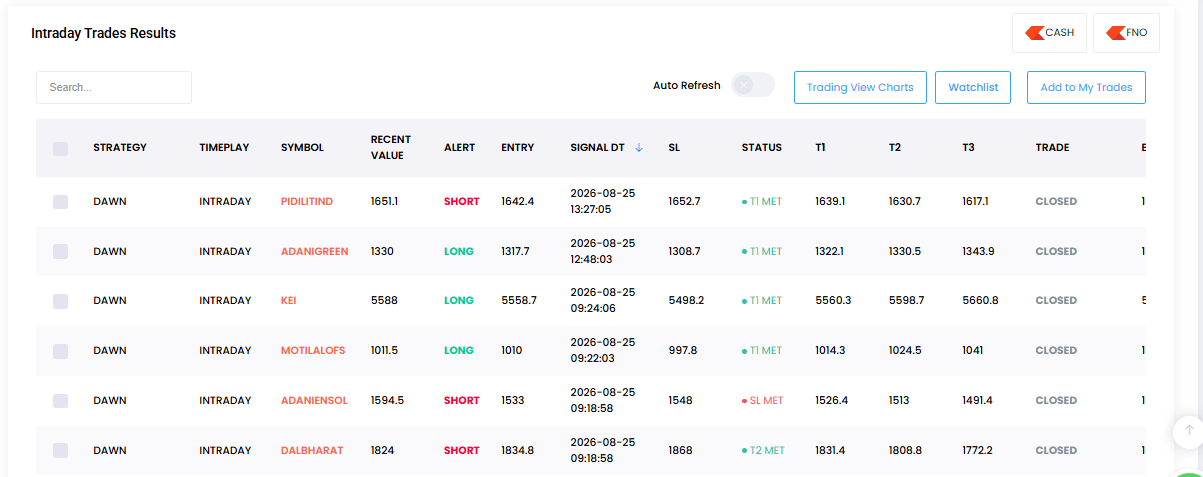
A Better Intraday Trading Routine
Instead of:
Tip → Entry → Hope
Try a more structured workflow:
1. Market
What is the Nifty 50 doing?
2. Sector
Where is the actual strength or weakness?
3. Screen
Which stocks meet the defined technical conditions?
4. Watch list
Which stocks deserve continued attention?
5. Confirmation
What are RSI, trend, important levels and price structure indicating?
6. Risk
Where does the original trade analysis become invalid?
7. Execution
Only then decide whether to take the trade.
NeoTrader supports a top-down philosophy: first identify the market direction, then understand sector conditions and only then move towards stock-level opportunities.
Market → Sector → Screen → Watchlist → Confirmation → Risk → Execution
More Signals Are Not Necessarily Better
This is another common misconception.
A platform showing 100 trade ideas is not automatically more useful than one showing 10.
NeoTrader includes Curated and Super Curated filtering concepts designed to reduce the number of candidates by requiring stronger technical alignment.
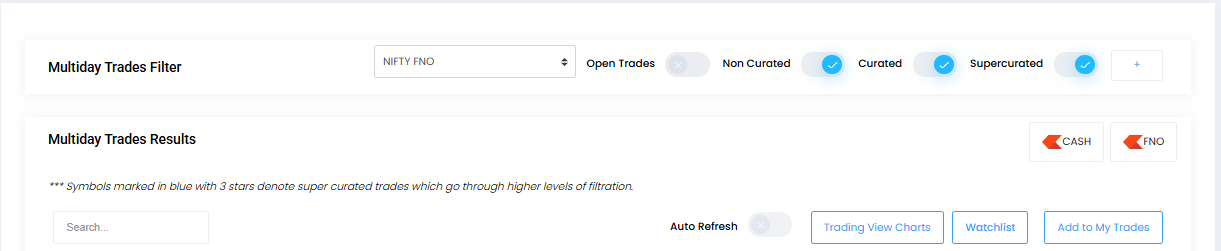
The benefit of a stock screener should therefore be judged by asking:
“How much irrelevant information did it remove?”
Not:
“How many stock names did it give me?”
The purpose of a stock screener is not simply to produce more trading signals.
Its value lies in helping traders focus on the opportunities that deserve closer analysis.
From Stock-Tip Dependency to a Structured Process
A stock tip generally provides a conclusion.
A screening and confirmation process provides context.
| Tip-Dependent Approach | Structured Approach |
|---|---|
| Receive a stock name | Apply defined screening conditions |
| Enter immediately | Check whether the signal is still valid |
| Ignore the broader market | Review market and sector direction |
| Use a random stop-loss | Identify the technical invalidation level |
| Depend on the next tip | Build and manage a focused watchlist |
| Hope the trade works | Make an informed trading decision |
A structured process does not guarantee that every trade will succeed.
It gives you a clearer reason for selecting, entering and managing the trade.
Conclusion
Following stock tips can feel easier because someone else makes the first decision.
But it also creates dependency.
A more sustainable process is:
Screen → Shortlist → Confirm → Manage Risk → Decide
NeoTrader helps make that transition by combining technical screening, watchlists, Rolling Ticker, market analysis and defined trading workflows.
The goal is not to eliminate decision-making.
It is to give you better information before you make the decision.
Find Intraday Stocks Through a Structured Process
If you currently depend on stock tips or spend too much time manually searching for intraday stocks, see the NeoTrader workflow live.
Book a personalised NeoTrader product demo with our team.
(Disclaimer: For educational and informational purposes only. Trading and investing involve market risk. Technical screeners and trading signals do not guarantee profitable outcomes. NeoTrader supports technical analysis and decision-making; it does not eliminate market risk.)
Like what you see? Share with a friend.


