









Missed Your Entry Price? Should You Still Take the Trade?
The Stock Is Moving—but Is the Trade Still Valid?
You open NeoTrader at 11:30 AM. A trade recommendation appeared earlier. The suggested entry was ₹500.The stock is now trading at ₹515. It is still moving in the expected direction.
Do you enter?
This is one of the most common questions traders face—and one of the easiest situations in which FOMO can replace analysis.
The answer should not automatically be:
“The stock is still rising, so yes.”
The better question is:
“Does the trade still make sense at the current price?”
A stock can continue moving in the expected direction while the quality of the trade has already changed significantly.
The Trade Has Changed
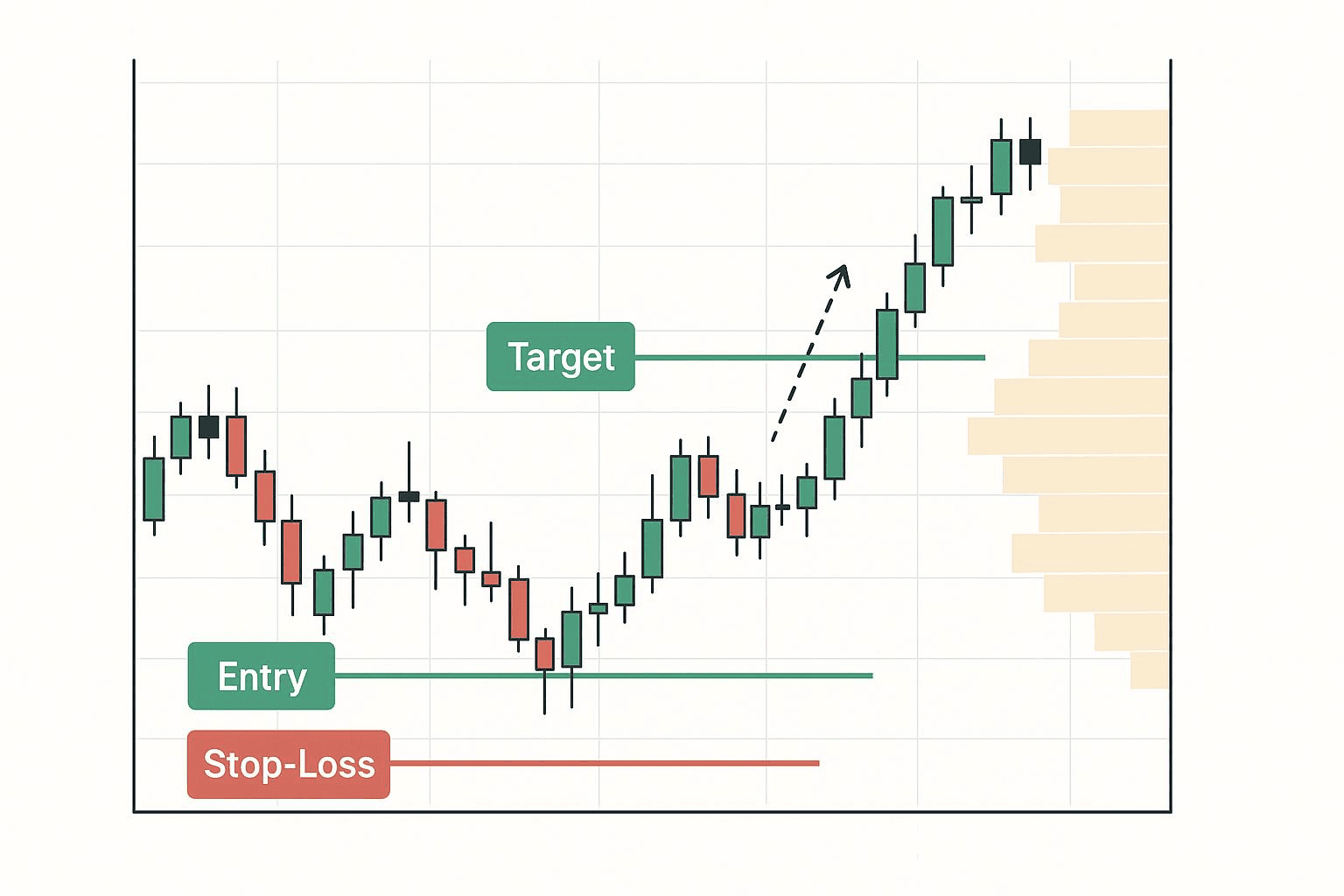
Imagine the original trade structure was:
| Trade Level | Price |
|---|---|
| Entry | ₹500 |
| Target | ₹520 |
| Stop-Loss | ₹490 |
At the original entry price of ₹500:
• Potential upside: ₹20
• Potential downside: ₹10
• Risk-reward ratio: 1:2
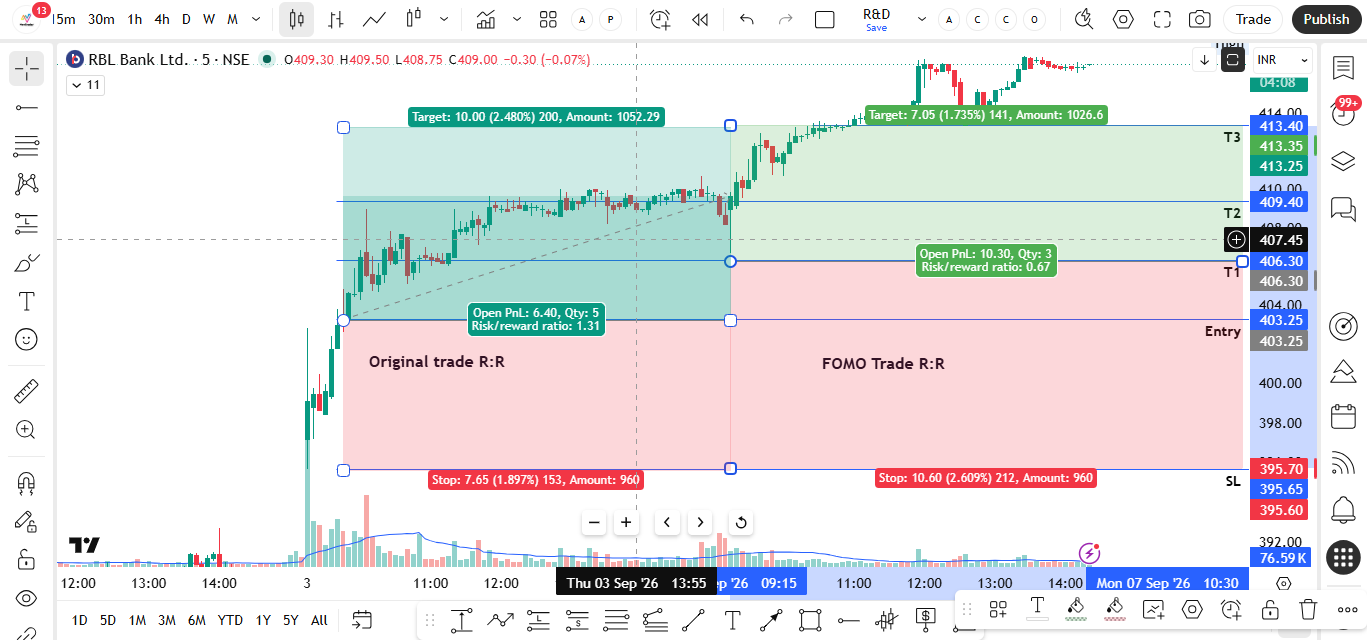
Now imagine entering at ₹515 while keeping the same target and stop-loss.
| Trade Level | Price |
|---|---|
| Late entry | ₹515 |
| Target | ₹520 |
| Stop-Loss | ₹490 |
At the late entry price of ₹515:
• Potential upside: ₹5
• Potential downside: ₹25
• Risk-reward ratio: 1:0.2
Same Stock → Same Bullish View → Very Different Trade
This is why a trade should not be taken blindly after the original alert if the price has already moved significantly away from the entry area.
The direction may still be correct.
But the remaining reward may no longer justify the increased risk.
Always Check the Timestamp
A trading recommendation is generated according to the conditions that existed at a particular time.
Markets continue moving after the recommendation appears.
During that period:
• The broader index may change direction
• Market breadth may improve or weaken
• Momentum may slow down
• The relevant sector may reverse
• The stock may approach resistance
• A large portion of the expected move may already be complete
Therefore, when viewing a trade later, always ask:
“When was this recommendation generated?”
And:
“Where was the price when the setup appeared?”
The timestamp provides essential context.
A recommendation generated earlier in the session should not automatically be treated as a fresh opportunity several hours later.
Old Signal ≠ Fresh Entry
Recheck the NeoTrader Dashboard
If you missed the original trade, do not only look at the stock.
Return to the broader market context.
Ask:
• What does the NeoTrader Dashboard show now?
• Has market breadth improved or weakened?
• Has the relevant sector changed direction?
• Is bullish or bearish participation increasing?
• Is the Nifty 50 still supporting the original trade direction?
• Has the overall market become more indecisive?
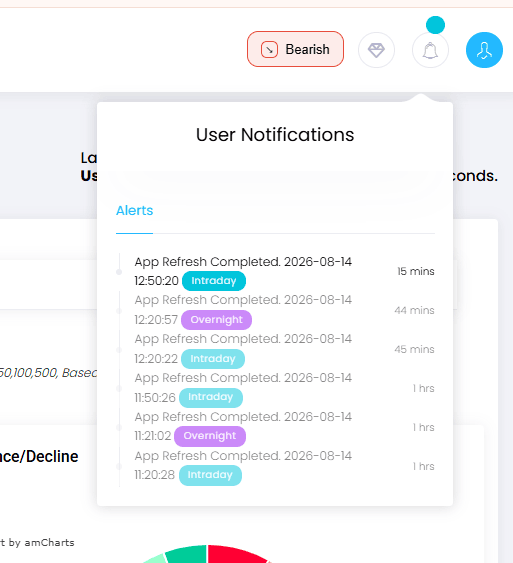
The Dashboard is designed to reflect changing market behaviour throughout the trading day.
The market environment that created the original setup may no longer be the same.
Original Market Conditions → Trade Generated
Current Market Conditions → Trade Must Be Reassessed
What If the Price Is Still Close to the Entry?
That is a different situation.
If the stock remains close to the original entry area and the underlying technical conditions are still intact, the setup can be reassessed.
The key word is:
Reassessed
Not blindly followed.
Check:
• Current market direction
• Sector strength
• Technical structure
• Current price compared with the original entry
• Distance to the stop-loss
• Remaining target potential
• Time elapsed since the signal
• Any new or contradictory alerts
If the trade continues to offer an acceptable structure and fits your trading plan, it may still deserve consideration.
But proximity to the original entry price alone is not enough.
The technical and market conditions should also remain valid.
Ready-Made Trades Are a Framework, Not a Permanent Invitation
NeoTrader’s Ready-Made Trades pages display structured trade information across:
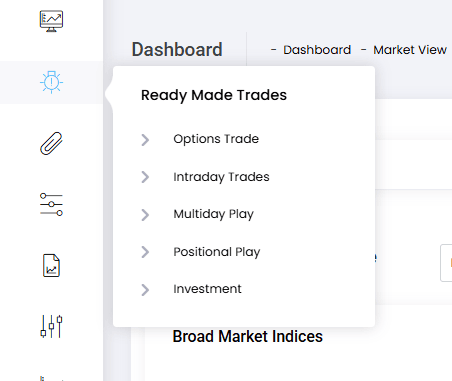
• Intraday
• Multi-Day
• Positional
Depending on the trade section, the information may include:
• Entry level
• Target level
• Stop-loss level
• Trade direction
• Relevant timestamp
These levels help provide structure.
But they do not mean that an old entry remains equally attractive at every future price.
The trader still needs to assess the current situation.
Trade Levels Provide a Framework
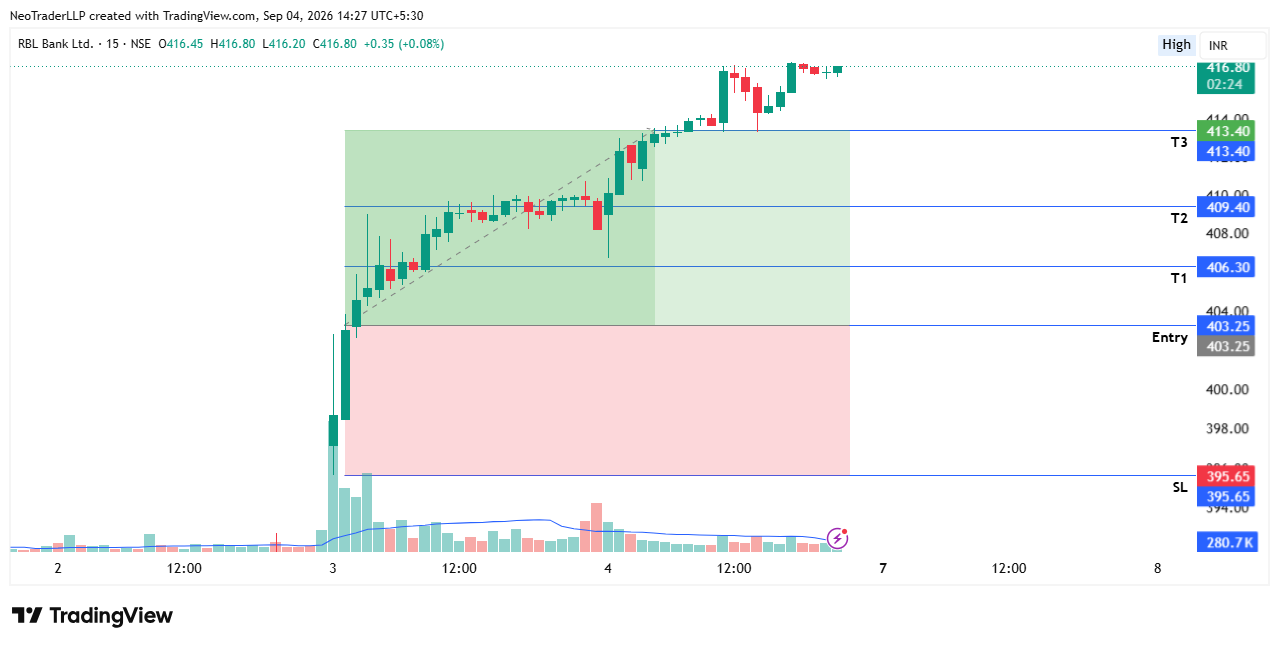
The Current Price Determines Whether That Framework Still Makes Sense
How a Late Entry Changes Risk-Reward
Risk-reward is not fixed only by the original recommendation. It changes according to the price at which you actually enter.
For a potential long trade:
Remaining reward:
As the price moves closer to the target:
• The remaining reward becomes smaller
• The distance to the original stop-loss becomes larger
• The trade may become less attractive
• The original risk-reward structure may disappear
This is why entering late can create a poor trade even when the stock continues moving in the expected direction. Being Right About Direction Is Not Enough Entry Price Still Matters
Should You Move the Stop-Loss Closer?
A trader may try to solve the late-entry problem by moving the stop-loss closer to the current price.
But that can create another issue.
The original stop-loss may have been based on a technical invalidation level.
Moving it closer only to improve the numerical risk-reward ratio may place it inside normal market volatility.
Before changing the stop-loss, ask:
• Is the new stop-loss based on a valid technical level?
• Does it represent the point where the current analysis becomes wrong?
• Or am I changing it only because I entered late?
A stop-loss should reflect the trade structure.
It should not be adjusted randomly to make a delayed entry appear more attractive.
FOMO Changes the Question

The emotional question is:
“What if the stock continues rising without me?”
The analytical question is:
“If I had never seen the original recommendation, would I consider entering at this price right now?”
If the answer is no, the trade may already be gone.
That can be frustrating. But missing a trade is not the same as losing money. Chasing a stock after the original structure has changed can turn a missed opportunity into an avoidable loss. There Will Be Another Opportunity You do not need to participate in every move.
A Late-Entry Checklist
Before entering after the original trade signal, ask:
1. When Was the Trade Generated?
Check the timestamp and determine how much time has passed.
2. How Far Has the Price Moved?
Compare the current price with the original entry level.
3. How Much Target Potential Remains?
Calculate the distance between the current price and the target.
4. What Is the Current Stop-Loss Distance?
Determine how much risk remains from the current entry price.
5. Has the Risk-Reward Ratio Changed?
Do not rely on the original trade structure if you are entering at a different price.
6. Is the Market Still Supportive?
Recheck the NeoTrader Dashboard, market breadth and the Nifty 50.
7. Is the Sector Still Aligned?
Confirm that the sector continues supporting the trade direction.
8. Is the Technical Setup Still Valid?
Check the trend, momentum, support, resistance and any subsequent alerts.
9. Does the Trade Still Fit Your Plan?
If you would not take the setup as a fresh trade at the current price, avoid entering only because you fear missing the move.
A Better Decision-Making Process
When you discover an older trade recommendation, follow this process:
Check Timestamp
↓
Compare Current Price With Original Entry
↓
Recalculate Remaining Reward and Risk
↓
Recheck Market and Sector Context
↓
Confirm That the Technical Setup Still Exists
↓
Enter or Skip Based on Your Trading Plan
The final outcome may be:
Setup Still Valid → Consider the Trade
Or:
Trade Structure Has Changed → Skip the Entry
Both are valid decisions.
Conclusion
Missing an entry can be frustrating. But chasing a stock after the original trade structure has changed can create a much larger problem. Always compare:
Current Price → Original Entry → Target → Stop-Loss
Then recheck the market context. A good stock idea is not automatically a good trade at every price. NeoTrader provides the levels and timing context. Your responsibility is to decide whether the setup still makes sense now.
Understand NeoTrader Trade Levels in the Right Context
Want to learn how to read NeoTrader’s Ready-Made Trades with the correct entry, timing and risk context?
Book a guided platform walkthrough with our team.
(Disclaimer: For educational and informational purposes only. Trading and investing involve market risk. Trade levels, technical signals and risk-reward calculations do not guarantee profitable outcomes. NeoTrader supports technical analysis and decision-making; it does not eliminate market risk.)
Like what you see? Share with a friend.


